
You’re not imagining it:
Why Tinnitus Gets Worse at Night
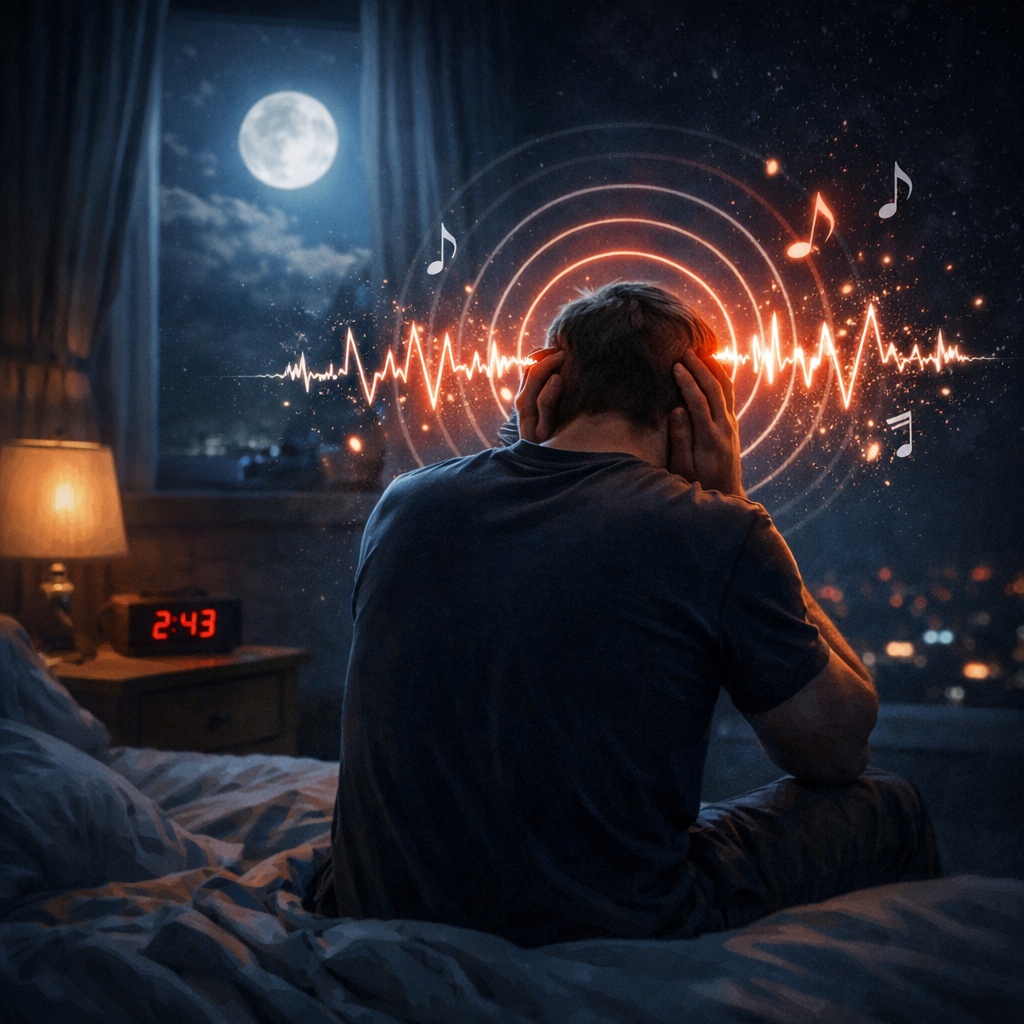
If you notice ringing, buzzing, or humming in your ears, you’re not alone. Many people with tinnitus say the sound becomes much more noticeable at night, especially when trying to fall asleep. Understanding why this happens can help you find ways to manage it and rest more comfortably.
Why Tinnitus Seems Louder at Night
1. There’s Less Background Noise
During the day, your brain is busy processing sounds—
conversations, traffic, music, and everyday activity.
These sounds can help mask the ringing in your ears.
At night, when the environment becomes quiet, there are fewer external sounds to compete with tinnitus. As a result, the ringing stands out more and feels louder, even though the sound itself may not have changed.
2. Your Brain Becomes More Aware
When you lie down to sleep, distractions disappear.
without work, screens, or conversation to focus on, your
brain naturally becomes more aware of internal
sensations—including tinnitus.
This increased awareness can make the sound feel more intense and frustrating.
3. Fatigue and Stress Can Play a Role
Stress and fatigue are common triggers that can make
tinnitus feel worse. By the end of the day, your body may
be more tired, your muscles more tense, and your stress
levels higher.
All of these factors can influence how strongly tinnitus is perceived.
4. Changes in Blood Flow and Body Position
Some people notice that tinnitus changes when lying
down. This may be related to shifts in circulation, blood
pressure, or the position of the neck and jaw.
While this doesn’t affect everyone, it can contribute to nighttime symptoms for some individuals.
5. Silence Makes the Brain Fill in the Gaps
The brain is designed to interpret sound constantly.
When the environment becomes completely quiet, the
brain sometimes amplifies internal signals.
This is similar to how a faint noise becomes easier to hear in a silent room than in a busy one.